Lesson Introduction
Listen to Dr. Onayemi's Audio:
Introduction: Welcome to the Doctor of Education in Computer Science program's course on AI in Education. This course explores the dynamic intersection of artificial intelligence (AI) and education, delving into the fundamental concepts, historical development, and practical applications of AI technologies in educational settings.

Fotor AI Image Prompt: A futuristic classroom setting with a blend of traditional and cutting-edge elements. The room is filled with a warm, ambient light, and holographic displays surround the students. Traditional desks are seamlessly integrated with advanced technology, showcasing a harmonious coexistence of AI and traditional education.
Course Objectives:
Explore Fundamental Concepts: Understand the core principles of AI as they relate to educational contexts, including personalized learning, adaptive assessment, and intelligent tutoring.
Historical Development: Trace the historical development and key milestones in the evolving relationship between AI and education, providing context for current innovations.
Survey of AI Technologies: Examine a variety of AI technologies employed in educational institutions, ranging from Intelligent Tutoring Systems (ITS) to Natural Language Processing (NLP) applications and virtual reality.
Practical Implementation: Analyze case studies and real-world examples to gain insights into the practical implementation of AI in diverse educational settings, encouraging critical thinking and application.
Relevance in Education: In the rapidly evolving landscape of education, the integration of AI has become a transformative force. AI technologies offer the potential to revolutionize teaching and learning, providing personalized experiences, automating administrative tasks, and enhancing overall educational outcomes.
Relevance in Computer Science: From a computer science perspective, understanding the application of AI in education is crucial. This course explores the algorithms, technologies, and methodologies that underpin AI systems in educational contexts, providing computer science professionals with the knowledge and skills to contribute to the development and implementation of innovative solutions.
Course Structure: The course is structured to balance theoretical understanding with practical insights. Through a combination of lectures, case studies, discussions, and assignments, you will gain a comprehensive understanding of AI in education and its implications for both the education and computer science fields.
Importance of AI in Shaping Education
Watch the following video created by invideo AI:
Prompt used for creating this video:
Create a dynamic and engaging video that explores the transformative impact of Artificial Intelligence (AI) on the field of education. The video should highlight key aspects of how AI is reshaping traditional learning models, making education more personalized, inclusive, and technologically advanced.
Key Themes to Cover:
Personalized Learning: Showcase how AI enables personalized learning experiences by adapting content, pace, and assessments to individual student needs. Highlight real-world examples and success stories where personalized learning has significantly improved student outcomes.
Adaptive Assessment: Illustrate how AI-driven assessment tools provide instant feedback, helping educators understand student progress in real-time. Include examples of how adaptive assessments contribute to a more nuanced understanding of students' strengths and areas for improvement.
Automation of Administrative Tasks: Demonstrate how AI automates routine administrative tasks, allowing educators to focus on teaching. Explore the time-saving benefits and efficiency gains achieved through the automation of grading, scheduling, and other administrative processes.
Inclusivity: Showcase AI applications that promote inclusivity in education, such as speech-to-text and text-to-speech tools, language translation technologies, and accessibility features. Highlight stories of how these technologies break down barriers and create a more inclusive learning environment.
Data-Driven Decision Making: Emphasize the power of data analytics in education. Illustrate how schools and institutions use data to make informed decisions, track trends, and continuously improve teaching methods based on evidence.
Lifelong Learning and Skill Development: Explore how AI supports lifelong learning by creating adaptive and personalized learning pathways. Feature examples of individuals who have successfully upskilled or reskilled with the help of AI-powered educational platforms.
Innovative Teaching Methods: Showcase innovative teaching methods facilitated by AI, such as virtual reality, augmented reality, and gamification. Highlight how these technologies enhance engagement and understanding in the learning process.
Global Collaboration: Illustrate how AI fosters global collaboration in education. Feature online platforms that connect learners from different parts of the world, promoting cultural exchange and collaborative projects.
Tone and Style: The video should strike a balance between informative and inspirational, showcasing the positive impact of AI in education while emphasizing the ethical and responsible use of these technologies. Use visuals, testimonials, and real-world examples to make the content relatable and compelling.
Conclusion: End the video with a forward-looking message, emphasizing the continued potential of AI to revolutionize education and prepare students for the challenges and opportunities of the future.
Question 1:
What did you think about the video created using invideo AI? What are the potential uses for this tool for professors, teachers, and students?
Key Terms for AI in Education
These definitions provide a foundational understanding of key terms and concepts related to AI in education. Read the definition of each term carefully.
Artificial Intelligence (AI):
- Definition: Artificial Intelligence refers to the development of computer systems that can perform tasks that typically require human intelligence. In the context of education, AI is applied to enhance learning experiences, automate administrative tasks, and personalize education for students.
Machine Learning (ML):
- Definition: Machine Learning is a subset of AI that involves the development of algorithms that enable computers to learn from data and improve their performance over time without being explicitly programmed. In education, ML is used to analyze student data, predict learning outcomes, and tailor instructional approaches.
Personalized Learning:
- Definition: Personalized Learning involves tailoring educational experiences to meet the individual needs and preferences of each student. AI is utilized to adapt content, pacing, and assessments, providing a customized learning path for each learner.
Intelligent Tutoring Systems (ITS):
- Definition: Intelligent Tutoring Systems are AI-driven applications that provide personalized instruction and feedback to learners. These systems analyze the student's performance, adapt the learning material accordingly, and offer targeted assistance to support the learning process.
Adaptive Learning:
- Definition: Adaptive Learning refers to educational systems that dynamically adjust the learning experience based on individual learner progress. AI algorithms analyze data to determine the most effective instructional content and delivery methods for each student.
Natural Language Processing (NLP):
- Definition: Natural Language Processing is a branch of AI that focuses on the interaction between computers and human language. In education, NLP is applied to develop chatbots, language translation tools, and virtual assistants that enhance communication and support diverse learners.
Learning Analytics:
- Definition: Learning Analytics involves the collection, analysis, and interpretation of data related to learners and their contexts to optimize the learning experience. AI algorithms are often used in learning analytics to identify patterns, trends, and areas for improvement.
Virtual Reality (VR) and Augmented Reality (AR):
- Definition: Virtual Reality immerses users in a computer-generated environment, while Augmented Reality overlays digital content onto the real world. In education, VR and AR are used to create immersive and interactive learning experiences, enhancing understanding and engagement.
Gamification:
- Definition: Gamification involves incorporating game elements, such as competition, rewards, and challenges, into non-game contexts, including education. AI can be applied to create adaptive and personalized gamified learning experiences.
Ethical AI in Education:
- Definition: Ethical AI in Education refers to the responsible and fair use of AI technologies in educational settings. This includes considerations of privacy, bias mitigation, transparency, and ensuring that AI applications prioritize the well-being of learners.
Match each definition with the correct term.
Historical Development of AI in Educaiton
Watch this presentation, created using Canva's AI Presentation Tool:
(time to create an entire presentation: 2 minutes)
Canva AI Prompt: Design a presentation showing how the historical development of AI in education has evolved over several decades, marked by key milestones and innovations.
The historical development of AI in education has evolved over several decades, marked by key milestones and innovations. Here's a broad overview of the journey:
1. 1950s-1960s: Early Exploration and Foundation
- The early years of AI in education were characterized by foundational work in computer science and artificial intelligence. Researchers started exploring the potential of computers in education, focusing on programming languages, cognitive modeling, and early attempts at computer-assisted instruction.
2. 1970s-1980s: Emergence of Intelligent Tutoring Systems (ITS)
- The 1970s saw the emergence of Intelligent Tutoring Systems (ITS), a significant development in AI for education. Systems like MYCIN and Dendral were among the first to demonstrate the feasibility of using AI to tutor students in specific subjects.
3. 1990s: Rise of Educational Software and Multimedia
- The 1990s witnessed a surge in the development of educational software and multimedia applications. CD-ROMs and early interactive programs became popular tools for delivering educational content. However, the focus was often on content delivery rather than personalized learning.
4. Late 1990s-2000s: Internet-Based Learning and Adaptive Systems
- With the growth of the internet, the late 1990s and early 2000s saw the shift towards internet-based learning platforms. Adaptive learning systems began to gain prominence, utilizing AI to tailor content based on individual learner needs. The advent of online learning platforms marked a significant step forward.
5. 2010s: Massive Open Online Courses (MOOCs) and Learning Analytics
- The 2010s brought about the rise of Massive Open Online Courses (MOOCs), such as Coursera and edX, offering accessible and scalable education. Learning analytics gained traction, using AI to analyze large datasets to inform educational decisions and enhance the learning experience.
6. 2010s-Present: Personalized Learning and AI-driven Education
- In recent years, there has been a growing emphasis on personalized learning experiences. AI technologies, including machine learning and natural language processing, are increasingly integrated into educational tools and platforms. Intelligent Tutoring Systems have evolved to offer more sophisticated and personalized support.
7. Current Trends (2020s): Virtual Reality, Augmented Reality, and Ethical AI
- The current decade has seen the integration of virtual reality (VR) and augmented reality (AR) into educational settings, providing immersive and interactive learning experiences. Additionally, there is a heightened focus on ethical considerations in AI in education, addressing issues related to privacy, bias, and responsible use.
Future Outlook: The future of AI in education is likely to be shaped by ongoing advancements in AI technologies, increased collaboration between educators and technologists, and a continued focus on creating inclusive and equitable learning environments.
As the journey continues, AI in education holds the promise of further revolutionizing how we teach and learn, making education more adaptive, personalized, and accessible to learners around the world.
True or False: AI is new to the field of Education and was recently developed for use in schools and classrooms.
False.
Intelligent Learning Systems
Intelligent Tutoring Systems (ITS) are AI-driven platforms designed to provide personalized and adaptive instruction to learners. These systems analyze individual student performance, identify areas of difficulty, and tailor instructional content and feedback to suit each learner's needs.
Key Features:
- Adaptive Feedback: ITS offers real-time feedback to learners, adapting to their progress and providing additional support where needed.
- Individualized Learning Paths: The system designs personalized learning paths based on the student's strengths, weaknesses, and learning style.
- Continuous Assessment: ITS continuously assesses the student's performance, adjusting the difficulty of tasks to optimize the learning experience.
Watch this video from Udacity about Intelligent Learning Systems and the power of Software Agents for personalized feedback:
Question 2:
Activity: Conduct a search to explore one or two intelligent learning systems then write a short essay reflection of the experience using the questions below as a general guide:
· What features of the learning system did you like most?
· Would you make any changes to the software to improve the tool?
· How could this tool be used in educational settings?
· What insights did you gain from this exploration?
Personalized Learning Platforms
LISTEN TO DR. ONAYEMI'S AUDIO:
Personalized Learning Platforms leverage AI to tailor educational experiences according to individual learner preferences, pace, and proficiency. These platforms often incorporate adaptive learning algorithms to provide a customized curriculum for each student.
AI Enhanced Learning Platforms:
LinkedIn Article: 6 Expert Tips for Personalized eLearning
Key Features:
- Adaptive Content: The platform adapts the difficulty and type of content based on the learner's progress.
- Learning Analytics: Personalized learning platforms use data analytics to track and analyze student performance, enabling educators to make informed decisions.
- Varied Learning Paths: Students can progress through material in multiple ways, fostering a more personalized and flexible learning journey.
10 personalized learning platforms
Which feature characterizes adaptive content in personalized learning platforms?
Dynamic adjustment based on learner progress. |
Natural Language Processing (NLP) Applications
Definition: Natural Language Processing (NLP) involves the interaction between computers and human language. In education, NLP applications use algorithms to understand, interpret, and generate human language, enhancing communication and interaction.
Key Features:
- Language Translation: NLP applications can translate educational content into multiple languages, making it accessible to a diverse student population.
- Chatbots and Virtual Assistants: Educational chatbots powered by NLP can provide instant support and answer student queries, enhancing the learning experience.
- Automated Essay Grading: NLP algorithms can analyze and grade written assignments, providing efficient and consistent assessment.
True or False: Chatbots like Chat GPT and Bard are examples of Natural Language Processing Tools.
Virtual and Augmented Reality in Education
AUDIO:
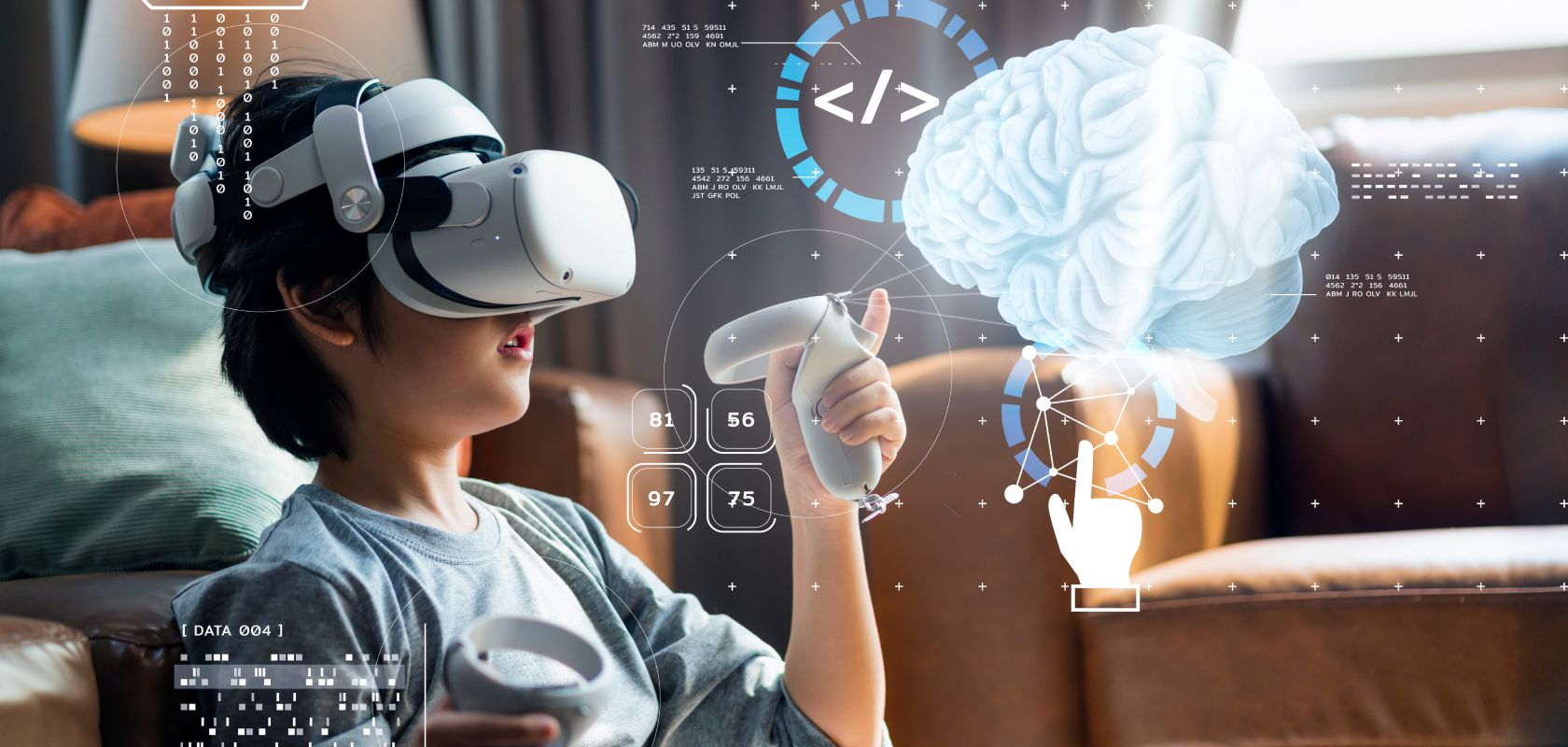
Definition: Virtual Reality (VR) and Augmented Reality (AR) technologies create immersive and interactive learning experiences. In education, VR and AR can transport students to virtual environments or overlay digital information onto the real world.
Key Features:
- Immersive Simulations: VR provides realistic simulations, allowing students to explore concepts in a virtual environment.
- Enhanced Visualization: AR overlays digital information onto the physical world, aiding in visualizing complex concepts.
- Engaging Learning Experiences: VR and AR enhance student engagement by providing interactive and hands-on learning opportunities.
Question 3:
Examine the case study details below and then write a short essay describing three strategies you would use to overcome the challenges presented.
Background: In a large university with diverse programs and student populations, the college help center faced the challenge of efficiently addressing a wide range of student inquiries. The university decided to implement ChatGPT, an AI-powered chatbot, to enhance the support services provided to students.
Implementation: The ChatGPT chatbot was integrated into the university's online student portal, allowing students to access it 24/7 for assistance with various queries. The chatbot was designed to understand and respond to inquiries related to course information, registration, academic resources, and general campus services.
Challenges Faced:
Understanding Context:
- Some students found it challenging to convey complex or nuanced questions, and the chatbot occasionally struggled to understand the context of certain queries.
Personalization:
- Students expressed the need for more personalized responses, especially when seeking advice on academic and career paths. They desired a human-like interaction that considered their individual circumstances.
Technical Limitations:
- Occasionally, the chatbot faced technical limitations in handling specific queries, leading to frustration among students seeking detailed or specialized information.
Additional Resources
AUDIO:
FOLLOW ON LINKEDIN: Jason Gulya, Andrew Ng, Chris Goodall, and Dana Onayemi ;)
Here's a list of additional resources to further explore the concepts discussed regarding AI in education:
Books:
- "Artificial Intelligence in Education: Promises and Implications for Teaching and Learning" by Rose Luckin
- "AI Superpowers: China, Silicon Valley, and the New World Order" by Kai-Fu Lee
- "Machine Learning Yearning" by Andrew Ng (Focus on the education applications chapter)
Online Courses:
- Coursera: "AI for Everyone" by Andrew Ng
- edX: "AI in Education" by Microsoft
- Udacity: "Artificial Intelligence for Trading" (Includes AI applications in finance, a relevant area for educational programs)
Research Papers and Journals:
- "The Journal of Artificial Intelligence in Education" - A scholarly journal covering a range of AI applications in education.
- "A Review of Artificial Intelligence Applications in Education: Opportunities and Issues" - A comprehensive review paper discussing the potential and challenges of AI in education.
Organizations and Conferences:
- International Society for Technology in Education (ISTE) - A global organization focused on integrating technology in education.
- Learning with MOOCs (LWMOOCs) Conference - A conference that often explores the intersection of AI and online education.
Blogs and Articles:
- EdSurge (https://www.edsurge.com/) - A platform covering the intersection of technology and education.
- The Chronicle of Higher Education - Features articles on the latest trends and discussions in higher education, including technology integration.
Online Platforms with AI Courses:
- IBM Skills (https://www.ibm.com/cloud/learn/ai-academy) - Offers free courses on various AI topics.
- Google AI (https://ai.google/education/) - Google's AI education resources.
Educational Technology Magazines:
- eSchool News (https://www.eschoolnews.com/) - Focuses on technology trends and innovations in education.
- EdTech Magazine (https://edtechmagazine.com/) - Covers the latest advancements in educational technology.
AI in Education Platforms:
- Carnegie Learning (https://www.carnegielearning.com/) - Provides AI-driven educational solutions.
- DreamBox (https://www.dreambox.com/) - Offers an AI-powered math learning platform.
These resources should provide a diverse and comprehensive exploration of AI in education, covering both theoretical concepts and practical applications. Feel free to explore based on your specific interests and focus areas within AI and education!
Lesson Review
Today's exploration into the realm of AI in education has been a journey through the transformative potential of technology in shaping the future of learning.
Let's recap the key insights and takeaways from our discussion.
Introduction to AI in Education:
- We began by understanding the fundamental concepts and principles of artificial intelligence as they relate to educational contexts. From personalized learning platforms to virtual and augmented reality, AI is reshaping how we teach and learn.
Historical Development:
- We took a historical perspective, tracing the development of AI in education. From early explorations in the 1950s to the rise of Massive Open Online Courses (MOOCs) in the 2010s, the journey has been marked by milestones and innovations.
- We explored various AI technologies used in educational institutions, including Intelligent Tutoring Systems, Personalized Learning Platforms, Natural Language Processing applications, and Virtual and Augmented Reality. These technologies contribute to creating dynamic and adaptive learning environments.
Case Study - ChatGPT in College Setting:
- We delved into a real-world case study, examining the implementation of ChatGPT in a college help center. The challenges faced, such as understanding context and personalization, prompted strategies for improvement and fostered collaborative discussions among students.
- We discussed the broader importance of AI in shaping the future of education. From enhancing student support to providing adaptive learning experiences, AI has the potential to make education more accessible, personalized, and engaging.
Interactive Learning and LinkedIn for Skill Growth:
- We explored the power of interactive learning through social media, with a focus on using LinkedIn for skill growth in AI education. From building professional profiles to engaging in discussions, LinkedIn offers a collaborative platform for continuous learning.
Thank you for joining me on this exploration of AI in education. Happy learning and I look forward to our continued exploration of the frontiers of education and technology!"
JOKE: Why did the computer take up teaching AI in education?
Because it wanted to make sure it had a byte-sized impact on the future of learning!

Comments
Post a Comment