Lesson Overview
Welcome to the Module 2 Lesson: AI and ML Basics and Potential in Education!
START AUDIO:
In today's rapidly evolving technological landscape, AI and ML are not just buzzwords; they are powerful tools reshaping the way we approach education. This lesson aims to demystify these concepts, providing you with a clear understanding of their definitions and showcasing their significance in various fields, with a special focus on their potential applications within education.
What to Expect
Throughout this lesson, we will embark on a journey that begins with the fundamentals of AI and ML, delves into their real-world applications in education, and explores key concepts that form the backbone of these revolutionary technologies. We'll discuss how AI and ML can revolutionize the learning experience, making it more personalized, adaptive, and efficient.
Lesson Outline
Understanding AI and Machine Learning:
- Defining AI and ML
- Significance in Various Fields
Applications of AI and ML in Education:
- Personalized Learning
- Adaptive Assessments
- Intelligent Tutoring Systems
Key Machine Learning Concepts:
- Supervised Learning
- Unsupervised Learning
- Reinforcement Learning
AI Ethics in Education:
- Bias and Fairness
- Privacy Concerns
- Transparency
Case Studies:
- IBM Watson Education
- Khan Academy
Future Trends:
- Virtual Reality (VR) in Education
- Predictive Analytics
Get Ready to Dive In!
Whether you're a student, educator, or simply curious about the intersection of technology and education, this lesson is tailored to provide you with insights into the transformative potential of AI and ML in the realm of learning.
Get ready to explore, learn, and discover the limitless possibilities that AI and ML bring to the world of education.
Let's get started!
Defining AI and ML
Artificial Intelligence (AI):
Definition: Artificial Intelligence is the culmination of computer science and cognitive psychology, aiming to create machines that can mimic human intelligence. These intelligent systems are designed to perceive their environment, learn from the data they encounter, and make decisions or take actions to achieve specific goals. AI can be categorized into narrow or weak AI, designed for specific tasks, and general or strong AI, which possesses human-like cognitive abilities across a wide range of domains.
:max_bytes(150000):strip_icc()/terms_a_artificial-intelligence-ai_asp-FINAL-ddba8ac599f3438d8064350d2ee1ae5a.jpg)
Components of AI:
Machine Learning: One of the core components of AI, Machine Learning involves algorithms and statistical models that enable computers to perform tasks without explicit programming. Through learning patterns from data, machine learning algorithms improve their performance over time.
Natural Language Processing (NLP): NLP focuses on the interaction between computers and human language. It enables machines to understand, interpret, and generate human-like text, opening avenues for chatbots, language translation, and sentiment analysis.
Computer Vision: This facet of AI empowers machines to interpret and make decisions based on visual data. It is the technology behind image and facial recognition, object detection, and autonomous vehicles.
Significance of AI:
AI's significance lies in its ability to augment human capabilities and solve complex problems across diverse domains. Here are key areas where AI has made a significant impact:
Healthcare: AI is revolutionizing diagnostics, predicting patient outcomes, and personalizing treatment plans. It accelerates drug discovery processes by analyzing vast datasets.
Finance: In the financial sector, AI algorithms analyze market trends, manage risk, and detect fraudulent activities, ensuring more efficient and secure transactions.
Retail: AI enhances customer experiences through personalized recommendations, optimizes supply chain operations, and streamlines inventory management.
Manufacturing: AI-driven robotics and automation improve production efficiency, quality control, and predictive maintenance, leading to increased productivity.
Entertainment: AI powers recommendation systems on streaming platforms, enhances gaming experiences, and facilitates the creation of AI-generated content, including music and art.
Defining AI and ML Cont'd
Machine Learning (ML):
Definition: Machine Learning is a subset of AI that focuses on the development of algorithms and models allowing computers to learn from data and make predictions or decisions. It involves the exploration of patterns and relationships within datasets, enabling machines to improve their performance without being explicitly programmed.
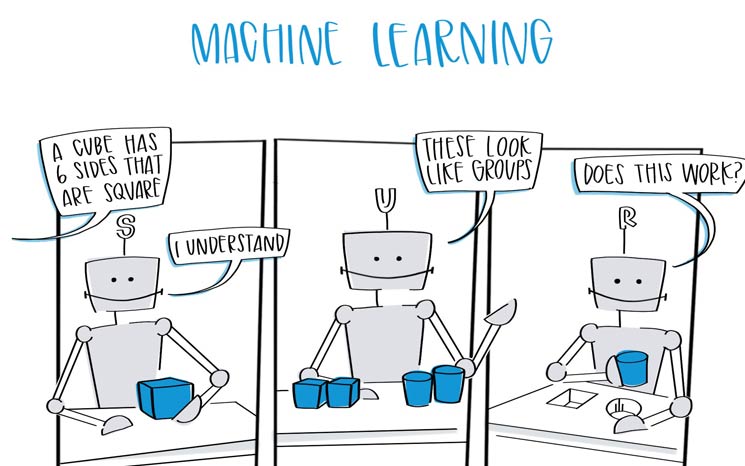
Types of Machine Learning:
Supervised Learning: In supervised learning, models are trained on labeled datasets, making predictions based on input-output pairs. It is widely used in classification and regression tasks.
Unsupervised Learning: Unsupervised learning involves learning from unlabeled data, discovering patterns and relationships without predefined outputs. Clustering and dimensionality reduction are common applications.
Reinforcement Learning: In reinforcement learning, agents learn through trial and error, receiving feedback in the form of rewards or penalties. It is prevalent in applications where an agent must make sequential decisions.
Significance of Machine Learning:
Predictive Analytics: ML models analyze historical data to make predictions about future events, such as weather forecasting, stock market trends, and customer behavior.
Natural Language Processing (NLP): ML algorithms enable machines to understand and generate human language, powering applications like language translation, chatbots, and sentiment analysis.
Image and Speech Recognition: ML excels in recognizing patterns, making it invaluable in image and speech recognition applications, from facial recognition to voice assistants.
Healthcare Diagnostics: Machine Learning aids in medical image analysis, diagnostics, and predicting patient outcomes, contributing to more accurate and timely healthcare interventions.
Recommendation Systems: ML powers recommendation algorithms, enhancing user experiences in areas like streaming services, e-commerce, and social media.
Machine Learning
At its heart, machine learning is about enabling machines to learn from data and improve their performance over time. Rather than relying on explicit programming, we leverage algorithms that can adapt and evolve, making sense of patterns and relationships within datasets. These algorithms allow machines to generalize from existing information and make informed predictions or decisions in new, unseen situations.
Types of Machine Learning
Note: This content is explored in depth in DCS725: Data Mining and Warehousing.
1. Supervised Learning
Definition: In supervised learning, the algorithm is trained on a labeled dataset, where each input is associated with the corresponding correct output. The model learns to map inputs to outputs, making predictions on new, unseen data.
Example: If the task is to classify emails as spam or not spam, the algorithm is trained on a dataset of emails with labels indicating whether each email is spam or not.
2. Unsupervised Learning
Definition: Unsupervised learning involves working with unlabeled data, where the algorithm explores patterns and relationships without predefined output labels. The goal is to discover hidden structures or groupings within the data.
Example: Clustering is a common unsupervised learning task, where the algorithm groups similar data points together without knowing the specific categories beforehand.
3. Reinforcement Learning
Definition: Reinforcement learning is centered around an agent that learns to make decisions by receiving feedback in the form of rewards or penalties. The agent navigates an environment, adjusting its actions to maximize cumulative rewards over time.
Example: Training a reinforcement learning agent to play a game where it receives rewards for completing objectives and penalties for making mistakes.
The Learning Process: Machines vs. Humans
While machine learning is a computational approach inspired by aspects of human learning, there are both similarities and differences. The iterative and adaptive nature of both processes underscores the dynamic and evolving nature of learning, whether in artificial intelligence or the human brain. Both systems share the fundamental goal of improving performance and making more informed decisions based on experience and exposure to information.

The Machine Learning Process:
1. Data Collection:
Machine learning begins with the collection of relevant data. This data serves as the foundation upon which algorithms will be trained. The quality and diversity of the dataset significantly impact the model's ability to generalize and make accurate predictions.
2. Feature Extraction:
In the feature extraction stage, relevant attributes or features are identified from the collected data. These features serve as the input variables that the machine learning model will use to make predictions. Feature extraction is akin to focusing on specific aspects of the data that are deemed essential for the learning task.
3. Training:
During the training phase, the machine learning model is exposed to the labeled dataset. The algorithm learns to map inputs to outputs, adjusting its internal parameters to minimize the difference between its predictions and the actual outcomes. This process involves iteratively fine-tuning the model to improve its performance.
4. Testing and Evaluation:
Once trained, the model is tested on new, unseen data to evaluate its ability to generalize. This step helps assess how well the model can make accurate predictions beyond the data it was trained on. The evaluation phase is crucial for determining the model's effectiveness and identifying potential areas for improvement.
5. Iterative Refinement:
The machine learning process is often iterative. Based on the evaluation results, adjustments are made to the model, and the training process is repeated. This iterative refinement continues until the model achieves the desired level of accuracy and generalization.
Comparisons with the Human Brain:
1. Data Processing (Learning from Experience):
Machine Learning: Algorithms learn from large datasets, extracting patterns and relationships to make predictions. The learning is data-driven and relies on exposure to diverse examples.
Human Brain: Humans learn from experience and exposure to various stimuli. The brain processes information, forms connections between neurons, and adapts based on experiences, gradually refining its understanding of the world.
2. Feature Recognition (Selective Attention):
Machine Learning: Feature extraction involves identifying relevant attributes from the data. The model focuses on specific features deemed crucial for the learning task.
Human Brain: Selective attention allows the brain to focus on specific stimuli or features in the environment, filtering out irrelevant information. This selective process is essential for efficient learning and decision-making.
3. Training (Neural Plasticity):
Machine Learning: Training involves adjusting internal parameters to minimize prediction errors. The model exhibits a form of artificial neural plasticity, adapting its structure based on the presented data.
Human Brain: Neural plasticity in the human brain refers to its ability to reorganize itself, forming new connections and adapting to changing circumstances. This plasticity underlies the brain's capacity to learn and adapt throughout life.
4. Testing and Evaluation (Generalization):
Machine Learning: The model is evaluated on new data to assess its generalization ability—its capacity to make accurate predictions beyond the training set.
Human Brain: Humans generalize learning by applying knowledge and skills acquired in one context to new, similar situations. This ability contributes to adaptive behavior in diverse environments.
5. Iterative Refinement (Continuous Learning):
Machine Learning: Iterative refinement involves making adjustments based on evaluation results, repeating the training process to enhance the model's performance.
Human Brain: Continuous learning is a hallmark of human cognition. Throughout life, the brain adapts and refines its understanding of the world through ongoing experiences and exposure to new information.
Theoretical Connections
Machine learning draws inspiration from various learning theories, each contributing to different aspects of the development and improvement of algorithms.
These learning theories collectively contribute to the diverse landscape of machine learning approaches, guiding the design and implementation of algorithms that can adapt, generalize, and improve over time.
As the field continues to evolve, the interplay between learning theories and machine learning methodologies will likely shape the development of more sophisticated and human-inspired learning models.
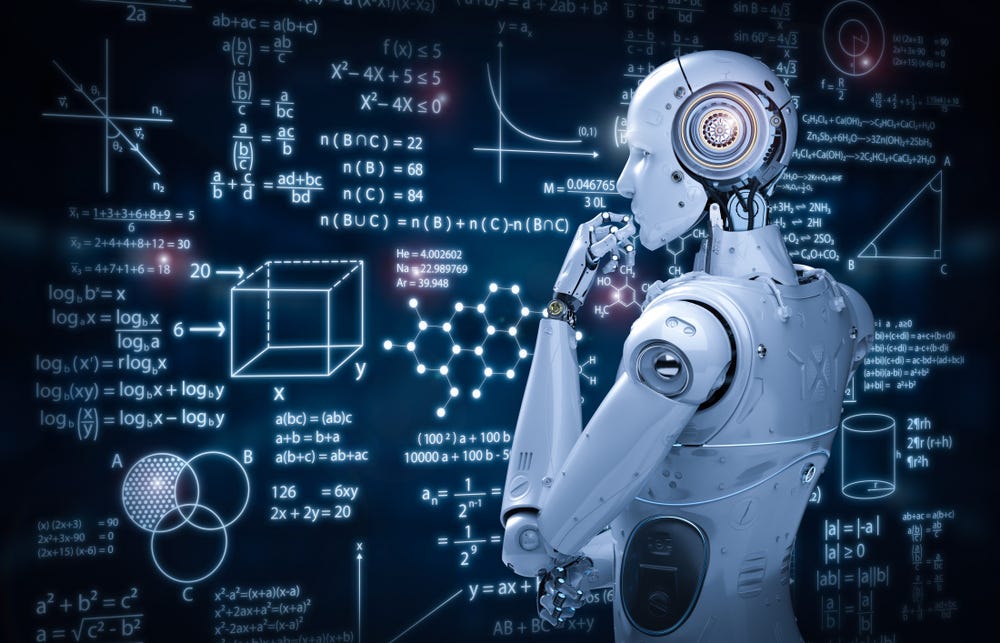
Here are some prominent learning theories applied to machine learning:
1. Behaviorism:
Application in Machine Learning: Behaviorism, which focuses on observable behaviors and responses to stimuli, aligns with the reinforcement learning paradigm in machine learning. In reinforcement learning, an agent learns by receiving feedback in the form of rewards or penalties based on its actions. The agent adjusts its behavior to maximize cumulative rewards, mirroring the principles of behaviorism.
2. Cognitivism:
Application in Machine Learning: Cognitivism emphasizes mental processes such as perception, memory, and problem-solving. Machine learning models often incorporate cognitive-inspired features, such as neural networks designed to mimic the interconnected neurons in the human brain. The process of feature extraction and abstraction in machine learning reflects cognitivist principles.
3. Constructivism:
Application in Machine Learning: Constructivism posits that individuals actively construct their knowledge by interacting with their environment. In machine learning, unsupervised learning algorithms, such as clustering and generative models, embody constructivist principles. These algorithms learn patterns and structures in data without explicit labeling, allowing the model to construct its own understanding.
4. Connectionism:
Application in Machine Learning: Connectionism, also known as neural network theory, is closely related to artificial neural networks in machine learning. The interconnected nodes in neural networks, inspired by the structure of the human brain, allow models to learn complex representations and relationships within data. Deep learning, a subset of machine learning, heavily relies on connectionist principles.
5. Social Learning Theory:
Application in Machine Learning: Social learning theory emphasizes the importance of social interactions in the learning process. Collaborative filtering algorithms in recommendation systems leverage social learning by considering the preferences and behaviors of similar users. This approach enhances the accuracy of personalized recommendations.
6. Transfer Learning:
Application in Machine Learning: Transfer learning aligns with the idea that knowledge gained in one context can be applied to another. In machine learning, transfer learning involves training a model on one task and then fine-tuning it for a related task. This approach leverages the knowledge gained in the initial task to improve performance on a new, similar task.
7. Enactive, Embodied, and Extended Cognition:
Application in Machine Learning: These theories emphasize the role of the body and the environment in the learning process. In machine learning, robotics and embodied AI explore the integration of physical interactions with the environment, allowing machines to learn not just from data but also from interactions with the surrounding world.
8. Constructive Alignment:
Application in Machine Learning: Constructive alignment, a theory in educational psychology, emphasizes aligning teaching and assessment methods with desired learning outcomes. In machine learning, the iterative refinement process, where models are adjusted based on evaluation results, can be seen as a form of constructive alignment to improve the alignment between the model's predictions and desired outcomes.
Match the learning theory with its key concept.
Behaviorism
Constructivism
Cognitivism
Connectionism

Comments
Post a Comment